
La Serenissima, as the Republic of Venice is known, was anything but serene during the Carnevale di Venezia. At that time Venice was known as the pleasure playground of Europe; a must-stop on The Grand Tour. Carnival was a time that Venetians and visitors alike unabashedly took part in revelry and licentiousness, any cares cloaked by their masks and costumes. Centuries later, Carnival is still Italy’s biggest event. As former seven year residents of a small village near Venice, we went to Carnevale – most years in our own period costumes – every one of those seven years. From a plethora of events to where and what to eat, and even how to put together a costume without needing to refinance your mortgage, we’ve put our experience and knowledge together to help you have a magical experience with our complete guide to Venice Carnival.

History of the Carnevale di Venezia
The history of the Carnival of Venice dates back to 1094, when the Doge Vitale Falier first mentioned the word “carnevale” in a document as a way of describing public amusements. In 1162 the Republic of Venice had defeated Ulrico, Patriarch of Aquileia, in a battle that year and slaughtered a bull and twelve pigs in Piazza San Marco to commemorate the victory. This celebration was around Shrove Tuesday (also known as Fat Tuesday).
Even though the celebration of the defeat of the Patriarch of Aquileia grew larger year after year, Carnevale di Venezia wasn’t officially recorded until 1268. The following year, the Senate declared the day before Lent (Shrove Tuesday) a public holiday.
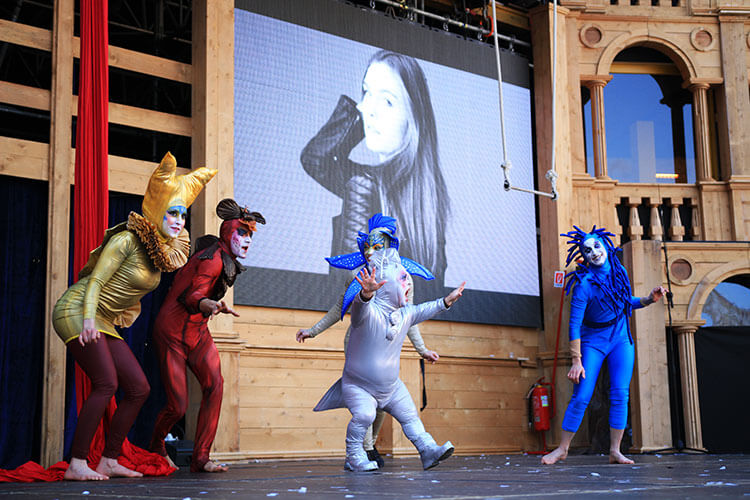
The Carnival of Venice carried on after that with jugglers, dancers and musicians all entertaining the public. Venetians would eat, drink and be merry before going in to the period of fasting during Lent. This continued until the fall of the Republic of Venice in 1798.
Carnival halted in Venice for nearly two centuries after the Austrians took control of the city in January 1798. Venice Carnival was even outlawed under the fascist government in the 1930s.
It wasn’t until 1979 that the Carnevale di Venezia was revived. Modern day Venetians recognized the potential for Carnival to bring money to the city, and the new 10-day long Carnival of Venice was born. Much like historical re-enactments in the US celebrate the victory of important battles, Carnevale di Venezia recreates a time when the Venetian Republic ruled the trade routes and held an elite place in the world. The lavish parties, costumes, masks, food, music and spectacles all tip their hat to the wealthy Venetian merchants of the past.

Things to Do at Venice Carnival
One of the misconceptions about attending Carnival in Venice is that it’s expensive. It’s not all about extravagant masked balls that do cost a small fortune. From the free shows and costume parades at Piazza San Marco to special video projections and free guided museum tours only happening during this two weeks, there’s a lot of free things happening that make attending the Carnival of Venice a not-to-miss event. Check the official Carnevale di Venezia program for a full list of all the events. We’ve also narrowed down our own favorites from our seven years of experience attending with these top things to do at Venice Carnival.
Il Volo dell’Angelo: Flight of the Angel
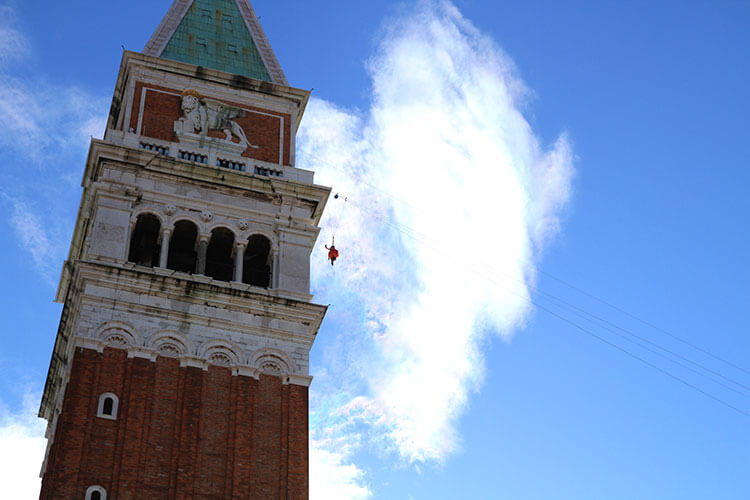
The Flight of the Angel, or Il Volo dell’Angelo in Italian, is one of the highlights of Carnevale di Venezia. It’s actually the event that officially kicks off the 10 days of Carnival, and it’s also one that dates back to the original carnivals during the La Serenissima period.
Back in the 16th century during the days of the Republic of Venice, a daring Turkish acrobat caused quite the stir. He had succeeded at a stunt to walk a rope from a boat anchored in front of Piazza San Marco to the top of the bell tower. He reached the balcony of the Palazzo Ducale during his descent, paying homage to the Doge. The crowds were so delighted, that this stunt became a tradition to be repeated by professional tight rope walkers each year on Shrove Thursday (the last Thursday before Lent).
Unfortunately, an acrobat fell to his death during the stunt in 1759 while attempting to fly down a rope at excessive speed. Seeing the crowds’ horror, the Doge outlawed the stunt from the further years that Carnival carried on until the entire event was banned from 1798.
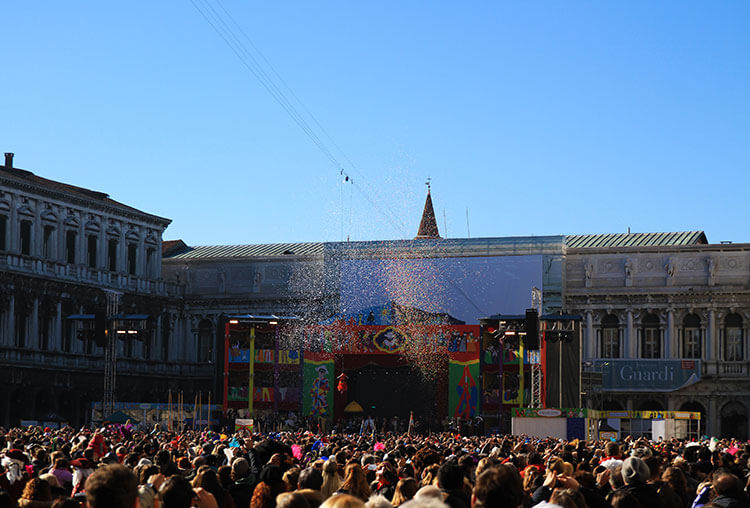
When Carnevale was revived in 1979 after its nearly two centuries of abandonment, this was one tradition that was carried on. Today, the winner of the previous year’s Festa della Marie, a sort of beauty pageant dating back centuries, has the honor of dressing in period costume complimenting the year’s Carnevale theme and descending along a sort of zip line from the bell tower at controlled speed. This event marks the official opening of Carnival.
It’s also the most crowded of any of the free Venice Carnival events. If you don’t make your way to Piazza San Marco early enough, you probably won’t make it in to the square at all because of crowd control. Plan to be in St. Mark’s Square no later than 10am in order to witness the Flight of the Angel, which still takes place at 12 noon on the first Sunday of Carnival.
Note that the Flight of the Angel is cancelled for 2026 due to safety reasons.
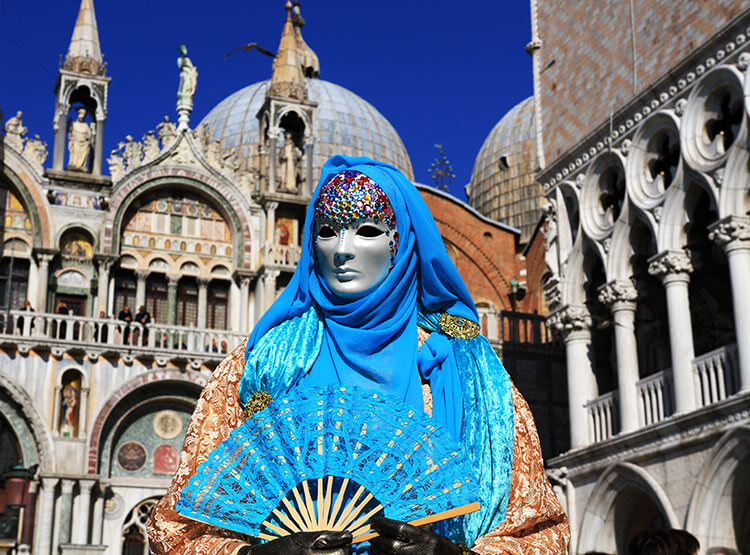
Costume Parade
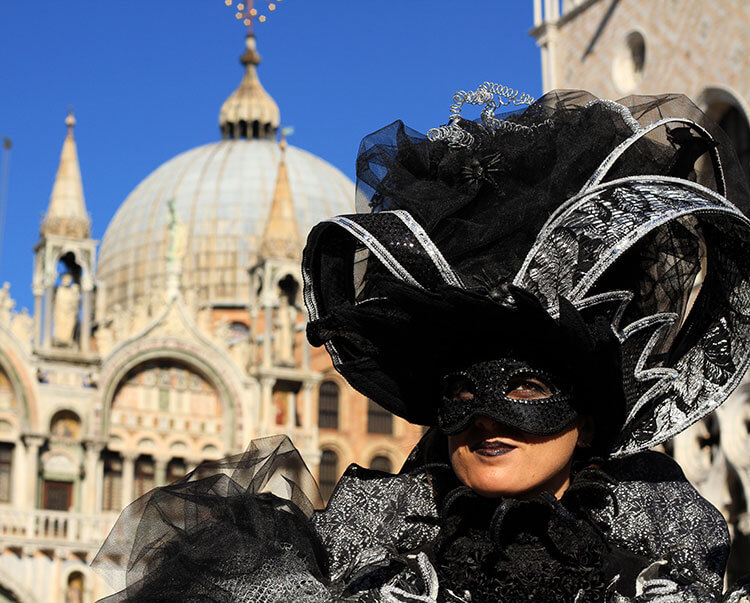
Masks are what make the Carnival of Venice so unique. Entire costumes are built around the selection of a unique mask, a tradition that began in the 5th century. Flamboyant and striking masqueraders strut their stuff in Piazza San Marco to the oohs and aahs of the crowds and for a chance at a prize.
Best of all, the masqueraders come from all over the world and anyone can enter. As with how the tradition to wear masks and “mask” your identity and social class began centuries ago, it’s impossible to know if the person under the costume is a Venetian. The daily costume parades are some of the best Venice Carnival free events and perfect for photo opportunities.
The costume parades take place daily during the 10 days of Carnival, with the daily winners being invited to participate in the final parade on the last Sunday.

Enter the Best Mask Contest
Don’t just watch the parades – be in the parades! A daily contest takes place on the stage in Piazza San Marco and it’s completely free to enter. Plus, the mask hides your identity so you can’t feel foolish. And if you need an ounce of courage to get up on that stage in front of the thousands that come to see the masks and costumes, toss back a glass of wine and enjoy the experience.
It’s free to enter. Just download and email the mask contest entry form from the Carnevale di Venezia website.

Venice Carnival Pub Crawl
With a price tag of €500 per person, the masked balls can cost as much to attend as your trip to Venice itself. For some the masked balls, which have a strict dress code and have dinner, dancing and entertainment, are a must-attend event. For us, it was never quite our cup of tea and probably would be most fun with a group of friends all willing to shell out for a party like that. Instead, we often opted for a costumed pub crawl.
The pub crawl, or giro d’ombra as it’s known in Italian, is very Venetian. A centuries old tradition itself, Venetians would move from bacaro to bacaro enjoying cicchetti (Venetian tapas) and a small glass of wine while socializing. Embodying a similar spirit of the ritzy masked balls, a Venice Carnival pub crawl where food, wine and socializing are what it’s all about, is a good alternative at a fraction of the price.
There’s honestly not much going on in the evenings during the Carnival of Venice, so the pub crawl is a great way to spend an evening out. And perhaps it’s the costumes or the wine that make us feel emboldened, but we always met friends we’ve kept in touch with on these pub crawls.
This pub crawl is only available during the 10 days of Carnival. Book the Venice Carnival Pub Crawl here. A cicchetti food tour is an excellent alternative for any time you’re visiting Venice and this Venice food tour by Walks of Italy is an excellent one.

Vivaldi Venice Carnival Concert
A journey back to 18th century Venice isn’t complete without discovering the music from the times when Venice was the pleasure capital of the world. It was a time when concerts, dancing and late-night revelry took place inside Venice’s churches and convents, and classical music was one of life’s indulgences. Venetian-born Antonio Vivaldi, who had been ordained a priest, instead decided to follow his musical passion and is recognized today as one of the greatest Baroque composers. Even Bach studied with Vivaldi and his musical influence spread far and wide.
Though Vivaldi concerts are also a quintessential Venetian experience you can attend any time of the year, there’s special Carnival Vivaldi concerts during the Carnival period. The special Carnival concert takes place in the sumptuously decorated Salone Capitolare, where you’ll most certainly feel as though you’re at the official Venice Carnival dinner show and ball, but again minus the extravagant price tag. The concert lasts about 90 minutes, and it’s another excellent way to spend an evening after dinner in Venice.
The I Musici Veneziani Carnival Concert is only available during the Carnival period. Book the concert here. A Vivaldi concert is a wonderful cultural way to experience for any time you’re visiting Venice and this Vivaldi Four Seasons Concert is the most popular.
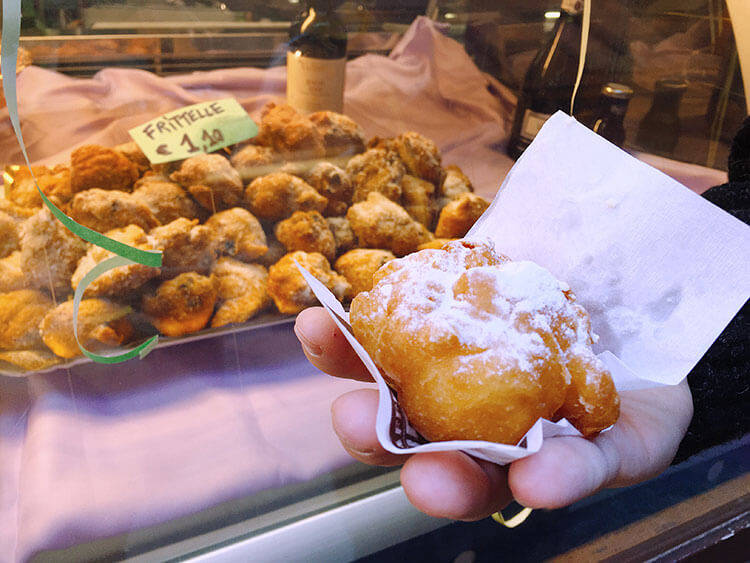
Eat Frittelle
The Carnival of Venice is known for a lot of things, though one you might not know about is the fried dough Venetians love to eat. Frittelle, literally meaning fritters, are like a type of fried donut that start showing up a few weeks before the Carnevale period, then disappear just as soon as Carnevale ends.
Frittelle are another tradition from La Serenissima and they were so popular that they were declared the national dessert. They could only be made by an authorized fritoler, and it was a job so exclusive that you could only become a fritoler if your father had been one.
These days frittelle are in just about every pastry shop of Venice from just after the Epiphany on January 6 until Carnival ends, and each will have their own recipe. Frittelle can be filled or not, and dusted with powdered sugar or rolled in cane sugar. The nutella filled ones from Pasticceria Dal Mas are to die for and the rum and chocolate creams ones from Bonifacio are out of this world. Any way you try them, they’re delicious and a special treat you can’t miss during the Carnevale period.
Book a Venice Carnival Activity or Event
How to Dress for Venice Carnival
Wondering what to wear for Venice Carnival?
As masqueraders ourselves for seven years, we assure you that it’s most fun to get in the spirit of things and wear a costume yourself. The tradition of the masks started to hide social status. If you couldn’t identify the wearer of the mask, you couldn’t possibly know his social status. And when you’re in period costume, you’re likely to be mistaken for a Venetian. Or, at the very least, it’s fun to feel like a celebrity for the day while everyone wants a photo with you.
Some of the costumes can cost thousands of dollars – more than your trip to Venice cost in the first place. But there’s no reason to worry. You can easily put together a great period costume for a reasonable price.
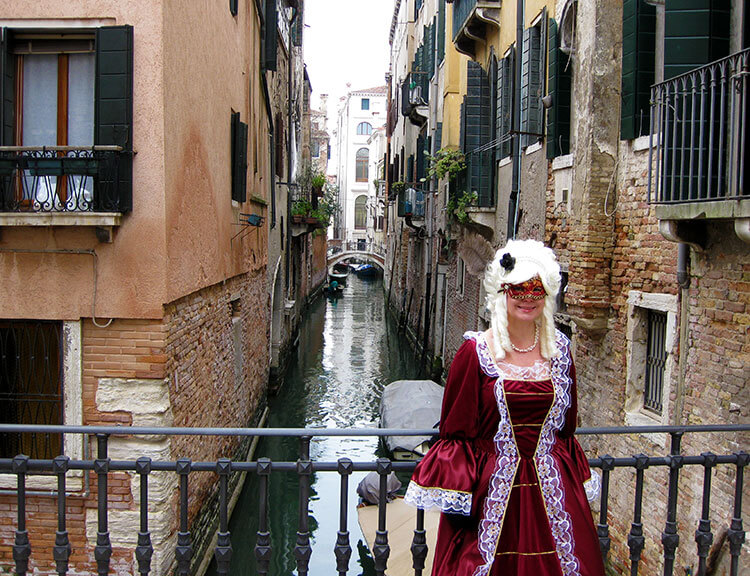
My costume cost less than $200, with the biggest expense being the dress. My exact wig and gloves are available on Amazon and a very similar dress is also available on Amazon. My mask was purchased in Venice and is a handmade artisan mask. I accessorized with a gold leather clutch I already had by Jimmy Choo and a string of pearls. For years that were much to cold to wear the dress alone, I also layered a faux fur jacket on top.
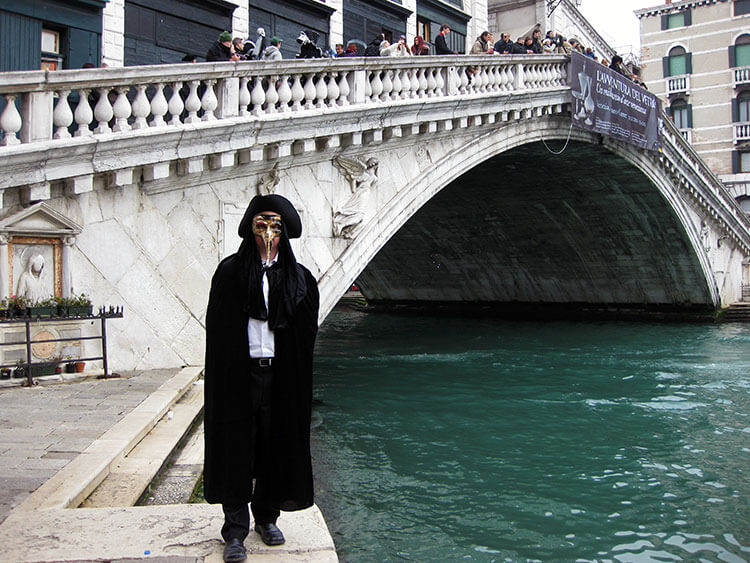
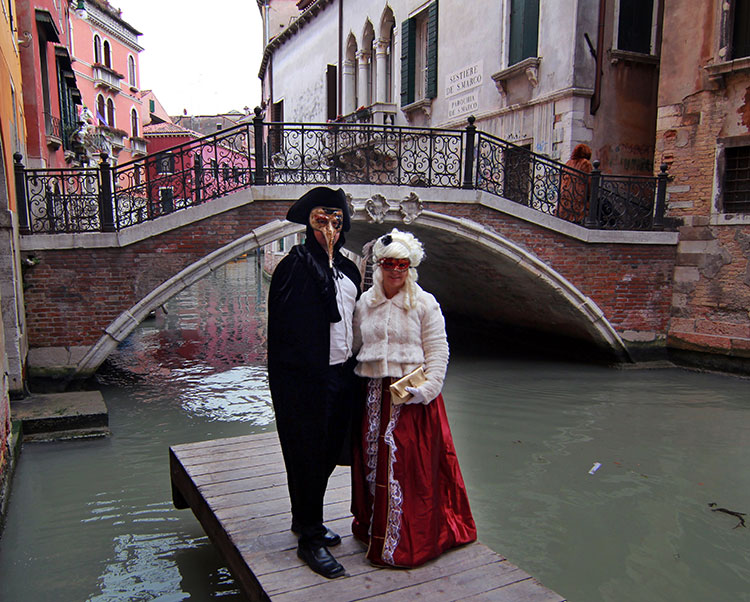
Men are a bit easier and the Plague Doctor is a popular choice. This was a very typical mask used not only for costumes in the Republic of Venice; the beak resembles a doctor’s long breathing apparatus which held a sponge doused in vinegar and was thought to prevent contracting the plague while treating patients.
Black dress pants and a white button down shirt might even be items you already have in your wardrobe. Tim ordered a black cape from Amazon, and purchased his mask in Venice and the three-tip hat in Venice.
There’s also places like Ca’ del Sol to rent period dress costumes from in Venice, though you need to plan several months in advance and book your costume. Rentals typically start around €200 for men’s costumes and around €350 for women’s costumes per day. That prices doesn’t include a wig, mask or other accessories.
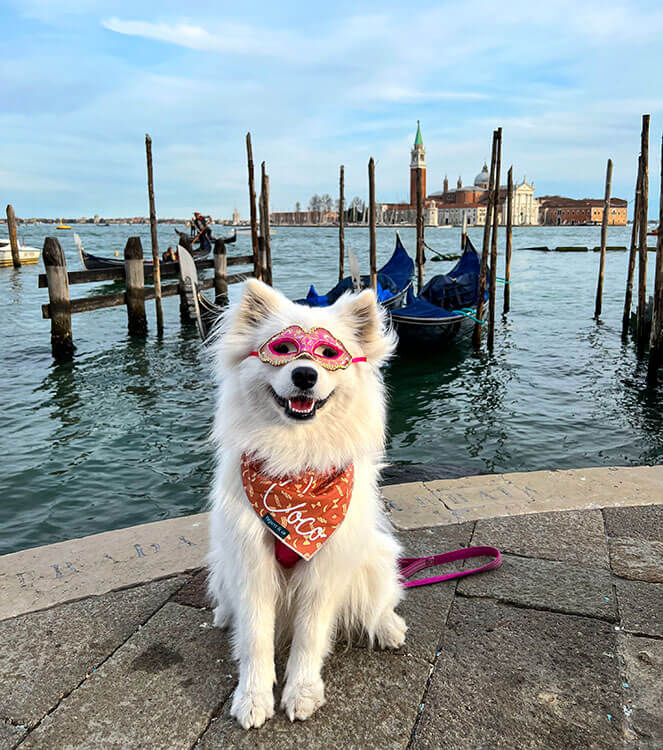
You definitely don’t have to dress in period dress. Carnival is one big party that fills every crevice of the island and is like a mixture of Mardi Gras and Halloween. While period costumes dominate the scene, pretty much anything goes. People even dress up their dogs. The point is just to dress up and join in the fun.
Your costume can even be as simple as picking up a mask in Venice. There’s also face painters, usually just outside of the Venezia Santa Lucia train station.
Masks from the little carts and tourists shops are inexpensive, but they’re also not made in Venice. If you want a traditional and truly Venetian-made mask, do yourself a favor and head to one of Venice’s mask makers’ shops. Benor Maschere Venezia in the Santa Croce neighborhood makes all of their masks by hand right there in their workshop. Ca’ Macana in the Dorsoduro neighborhood also makes all their masks right there in their workshop, and you can also see the masks being made. Mondonovo Maschere, also in the Dorsoduro, is famous for making masks for Hollywood blockbusters like Eyes Wide Shut.
There’s even Venetian mask making workshops, where you mix the sand and then paint your own mask that you can then take home. You’ll learn a bit about the history of the Carnival masks while you work with an artisan in a mask stop.
Shop Our Costumes
Where to Eat in Venice
We hate to say it, but it is easier to find bad overpriced food in Venice than it is to find good restaurants serving fresh and quality food. But it doesn’t have to be that way. The biggest rule of thumb is to turn and run in the other direction from any restaurant with someone outside trying to lure you in with a tourist menu and a free bellini. Don’t even look if the menu has pictures on it. And just get up and leave if the menu is in six languages. These are all pretty good indicators that what you’ve about to be served isn’t fresh or authentic.
Some of Venice’s best meals are to be had at the most unassuming of places – tiny bacari that can only hold a dozen people at most and you’d hardly notice if they weren’t throbbing with people. Cicchetti, pronounced “chee-KET-eeh,” are small dishes sold individually and eaten with friends over a glass of wine. Cicchetti bars, or bacari, have a selection and each bar will have its own specialties like Cà D’Oro alla Vedova’s meatballs, which are known as the best meatballs in Venice. Cicchetti typically cost from €1 to a couple of euro a piece, and you can easily select a plate full and have a glass of wine for under €10.

Discover the Real Venice on a Venice Food Tour
Snagging a table at a bacari can be a bit of challenge. Locals are happy to stand around chatting and nibbling, all while also impressively balancing a wine glass in hand.
Of course, all those bridges and stairs make anyone want to collapse in a chair and linger over a good Italian meal. There are definitely sit-down restaurants that are excellent, though you should plan to eat at them in your itinerary and make a reservation in advance.
To help you avoid a bad meal in a city bulging with crappy tourist restaurants, we’ve put together a list of a handful of our own favorite places to eat and find the best food in Venice at.
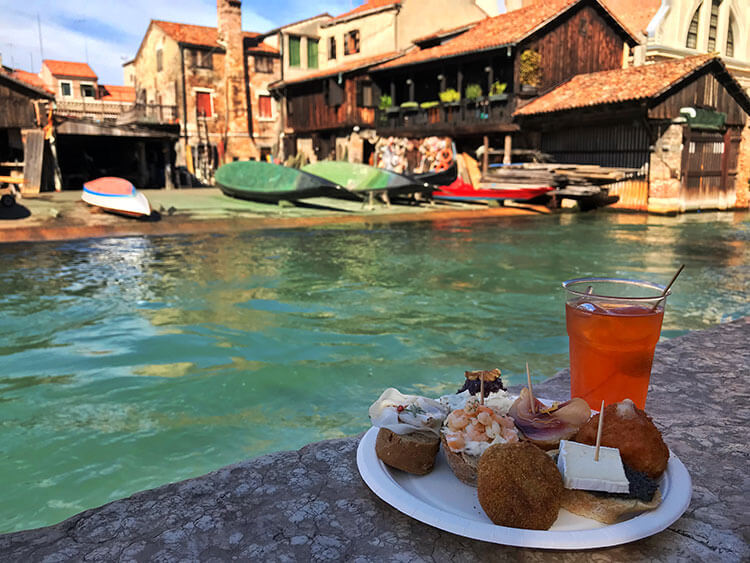
Osteria al Squero, Dorsoduro 943/944
Osteria al Squero is still off-the-beaten-path, or as off-the-beaten-path as one of Venice’s best bacari can be in a city that sees as many tourists each year as Venice does. But the tourists that do make it to Osteria al Squero don’t simply just stumble upon it; they purposefully seek this local favorite out.
Located directly across a small canal from Venice’s oldest still functioning gondola workshop, you’ll want to take your plate of cicchetti and drink outside to catch a glimpse of the gondolas being repaired and built.
The selection of cicchetti at Osteria al Squero is good and delicious. The swordfish is a favorite of ours. And at €1 – €2 a piece, you can try a plate full of various cicchetti.
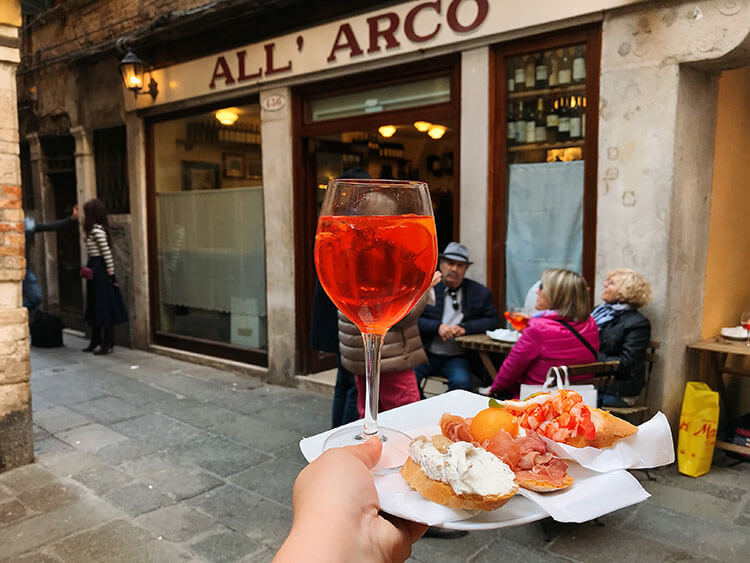
All’Arco, Sestiere San Polo 436
Just steps away from the Rialto, where you can find bad food by the boat load, is the tiny All’Arco. It’s family run and you’ll find either Francesco Pinto or his son Matteo behind the bar preparing the day’s cicchetti and serving up glasses of wine to hungry customers.
Even though many tourists have found their way to All’Arco, it’s still a long-loved local favorite. The cicchetti like langoustines, proscuitto di San Daniele with melon, or prawns are all served on bread and are quite tasty.
Expect to pay €1.50 – €2.50 a piece here. And while more expensive than out of the way Osteria al Squero, it’s a far cry from the ridiculous prices you’ll pay for a bad and cooked from frozen meal at the many tourist restaurants lining the Grand Canal near Rialto.
Al Timon, Fondamenta dei Ormesini 2754
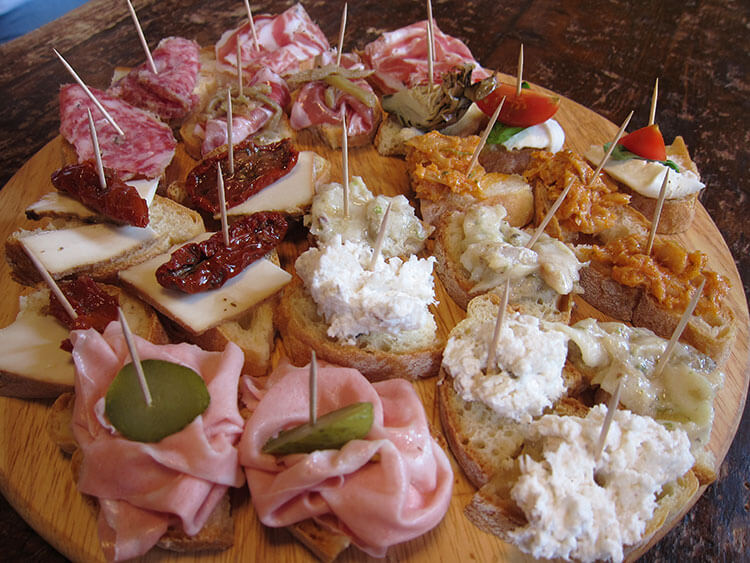
Al Timon has long been a local favorite in the Cannaregio neighborhood. There’s just a handful of tables, but it’s especially great if you can grab one of the outdoor ones along the Ormesini canal. The owner has a boat tied up there that serves as a stage for impromptu concerts for his patrons. The cicchetti selection is excellent with salumi, pecorino cheese topped with tomatoes and drizzled with olive oil or baccalà (a Venetian salt cod that is so creamy you won’t even guess that it’s fish).
There’s actually a menu at Al Timon and you can order a selection of pastas and main dishes. Prices are quite reasonable with pasta dishes starting around €12 and main courses like meat and fish from €18.
Cà D’Oro alla Vedova, Calle Cà d’Oro 3912
Alla Vedova, as it’s simply known among locals, has been run by the same family for over a century. It’s a bit rustic with the traditional wooden tables and copper pans, but this is Venetian charm at its best.
The small bacaro is known for making the best meatballs in Venice, though they won’t be covered in sauce and on top of heaping plate of spaghetti. That’s not actually Italian. These meatballs are sold individually as cicchetti and if you’re standing up eating at the bar, they’re usually served on a napkin. Get the meatballs early though, because only so many are made daily and when they’re gone, they’re done.
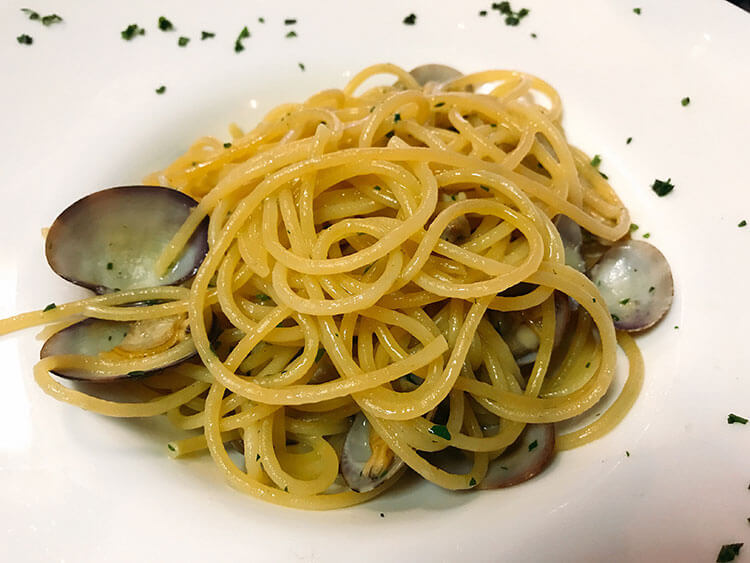
Alla Vedova does have a handful of tables and takes reservations for both lunch and dinner. The prices for pasta dishes start from €10. You’ll find traditional Venetian pasta dishes here like spaghetti with squid ink (bavette al nero di seppia), or the very rustic and thick Venetian spaghetti known as bigoli in salsa. We also like their spaghetti alla vongole (spaghetti with clams). Main dishes are also inexpensive from €11 and this is a good place to try the Venetian specialty of liver and onions.
Ristorante Casa Cappellari, Calle Figher, 805
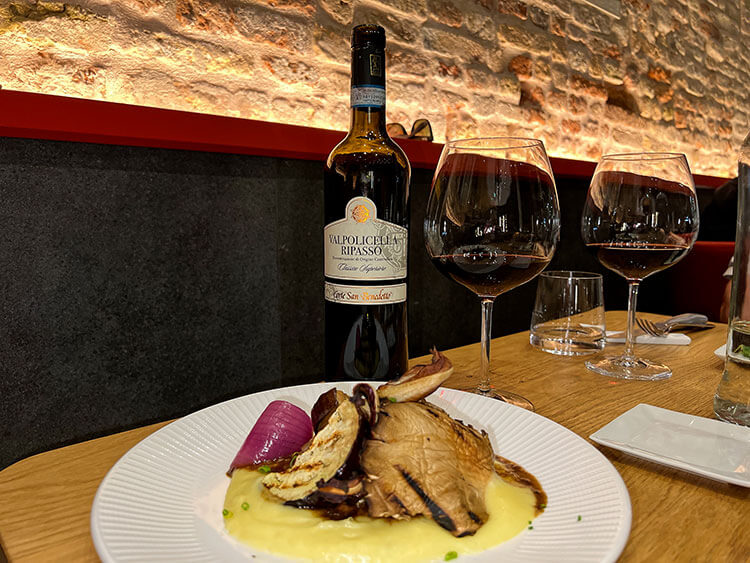
Casa Cappellari is a newer restaurant in the Venice dining scene, but its founders are no strangers to owning successful restaurants. A stone’s throw from Rialto, this upscale restaurant features a modern and innovative take on classic Venetian dishes.
At Casa Cappellari, all the pasta is homemade, the fish is purchased directly from the fish market, and even the bread and bread sticks are all made by hand in house. The menu changes seasonally to reflect the freshest and best regional products. When in season, you’ll find dishes like Venetian spider crab, which I highly recommend trying. And if the menu offers their braised veal cheek, don’t even hesitate to order this melt-in-your-mouth dish.
Casa Cappellari is a popular Venetian restaurant and ranked among the best. Expect to pay around €60 per person for a 2-course meal. Reservations are highly recommended and can be booked online on Casa Cappellari’s website.
Al Gatto Nero, Burano
When you need a break from the pulsating crowds in Venice, hop on the vaporetto and head to the colorful island of Burano. Not only is the fisherman’s island incredibly charming with the rainbow of houses, it’s also home to one of Venice’s best traditional restaurants.
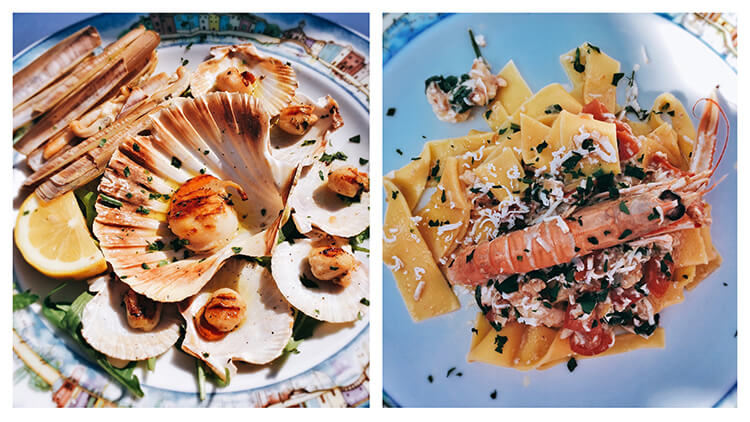
Of course, heading to a fisherman’s island you can expect the menu to be fish and seafood heavy. Try specialties from the Venetian lagoon like razor clams or langoustines. Savor the plates at one of the outdoor tables if the weather is nice enough, slowly sipping wine and watching the world (or the visitors of Burano) go by.
L’Alcova, Campo Santa Sofia Cannaregio 4198/99
Picture it. You’re sitting on a little terrace, one so exclusive there are only nine tables, at a 15th century palazzo right on the Grand Canal. The palazzo has even been declared a national monument. As you sip on some local wine, tourists on passing vaporettos crane their necks to see who might be special enough to dine on that little terrace of the ancient noble residence.
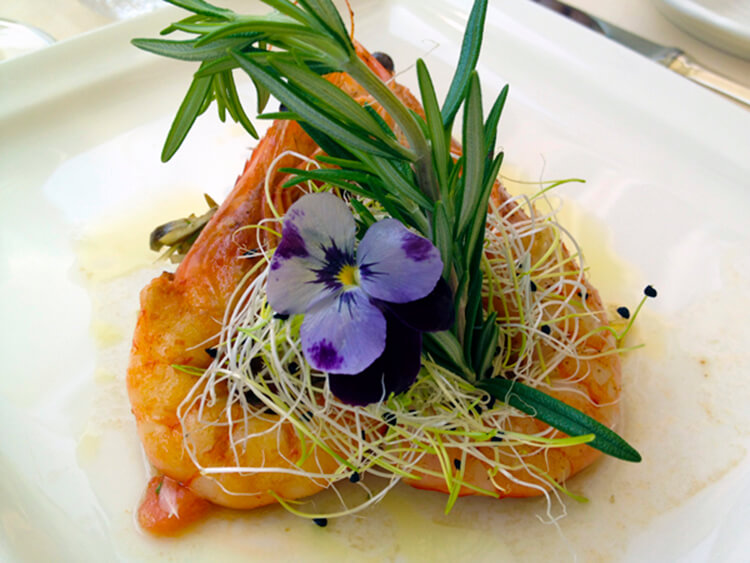
We know we said to steer clear of the restaurants lining the Grand Canal, but L’Alcova is different. L’Alcova is one of the most exclusive restaurants on the Grand Canal and worth the splurge for a memorable meal. The restaurant’s chef likes to put his own unique spin on traditional Venetian cuisine and he even takes the traghetto gondola across the Grand Canal to personally hand select fresh fish and vegetables from the Rialto Market daily.
Expect to pay €51 – €100 per person at L’Alcova and it’s best for a special romantic lunch or night out during your trip to Venice.
Da Mario Alla Fava, Calle dei Stagneri 5242
First opened in 1960, Mario Bonavita wanted to rediscover the true Venetian style of cooking. It has since been passed down from father to sons Mario, Guido and Luca, who continue with the same passion in running the restaurant that they inherited from their father.
The “gallery” of famous personalities that have enjoyed the restaurant are displayed on the walls of the restaurant along with photos of Mario Bonavita, lending to the family feel of this vintage Venetian restaurant.
The menu changes seasonally, but the dishes are traditional Venetian recipes with modern twists. Expect to pay €50 – €100 per person at Da Mario Alla Fava.
Where to Stay in Venice
When traveling to Venice, you want to stay right in Venice for the best access to all of the sights and events. Though hotels in Mestre can seem tempting as the price per night is lower than hotels right in Venice, remember that you’ll have to travel back and forth between Venice and Mestre either by bus or train.
Residenza Corte Molin
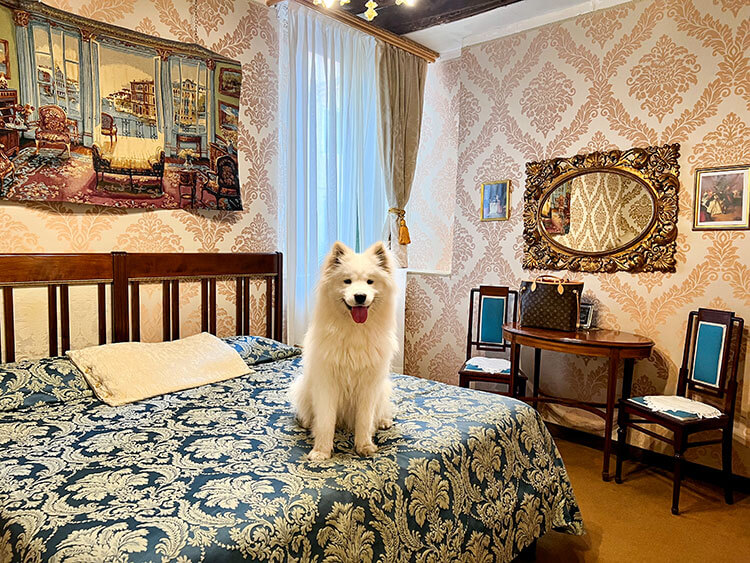
One of our absolute favorite boutique hotels in Venice is the Residenza Corte Molin. Set in a palazzo formerly occupied by none other than a Doge of Venice, the owners have taken great care to retain a feel of the Venice of days gone by. The rooms are decorated with historic furniture pieces typical of Venice’s heydays. Yet, the hotel offers modern conveniences like air conditioning (definitely necessary in Venice’s summer months), wifi, and spacious ensuite bathrooms.
The location is right in the heart of Venice, steps away from the Rialto Bridge but tucked just far away enough to always be quiet. The owner is incredibly friendly, and the hotel is dog-friendly. There’s also a garden for guest use where you can sit out and enjoy a glass of wine.
Know Before You Go
Carnival of VeniceWhere To Stay
A stay at the Gritti Palace Hotel, which is situated in a Venetian palazzo from 1475 on the Grand Canal will definitely make you feel like you’ve stepped back in time to a wealthy Republic of Venice. The rooms are updated with modern amenities and this is one of the best hotels of Venice.
Steps away from the Rialto Bridge, but tucked away in a quiet area is another palazzo once the home of a Doge of Venice. It’s now a small boutique hotel with care taken to make you feel like you’ve stepped back in time when Venice was still ruled by Doges. Modern conveniences like air conditioning and wifi make Residenza Corte Molin an excellent choice for your home away from home when visiting Venice.
Further away from the busyness of the Grand Canal is the boutique Cima Rosa Boutique Hotel. It has just five rooms, but the breakfast (and view from breakfast) is superb. It’s located in the Santa Croce neighborhood, close to a number of excellent cicchetti bars and restaurants.
This article contains affiliate links. When you book on Expedia, Viator or GetYourGuide and shop on Amazon through our affiliate partner links, we earn a small commission at no additional cost to you.